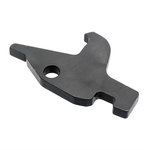
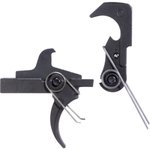
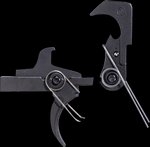
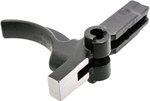
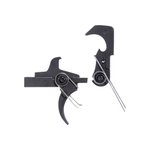
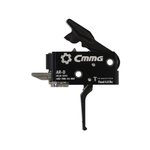
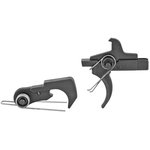
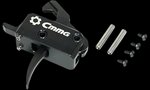
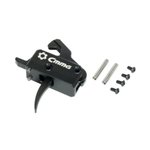
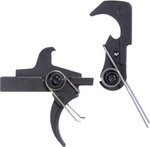
The trigger is arguably the most important component for accuracy in your AR-15. It controls the moment of firing and directly affects your ability to shoot precisely. Upgrading from a mil-spec trigger to a quality aftermarket option is one of the most impactful improvements you can make to your rifle.
Trigger Types
Single-Stage Triggers: The trigger moves through one consistent pull until it breaks. Preferred for precision shooting where you can carefully squeeze through the pull. Pull weights typically range from 2.5-4.5 lbs.
Two-Stage Triggers: First stage takes up slack with light resistance, then hits a defined "wall" before the second stage breaks the shot. Provides tactile feedback for precise trigger control. Popular for both precision and tactical applications.
Binary/Echo Triggers: Fire on both pull and release of the trigger. Specialty triggers for specific applications (where legal).
Key Specifications
Pull Weight: Lighter pulls (2.5-3.5 lbs) aid precision but require more discipline for safety. Heavier pulls (4-6 lbs) are better for defensive use where adrenaline and gloves are factors.
Reset: The distance the trigger travels forward before it can fire again. Short, tactile resets enable faster follow-up shots.
Creep and Overtravel: Quality triggers minimize both—creep is movement before the break, overtravel is movement after. Less of both improves consistency.
Installation Options
Mil-spec/Drop-in Compatible: Traditional triggers using standard pins. Require fitting and proper installation but offer the widest selection.
Self-Contained Drop-in: Cassette-style triggers that install as a complete unit. Easier installation, consistent performance, but typically more expensive. Popular options include Timney, CMC, and Rise Armament.
For home defense, consider a trigger in the 4-5 lb range with a crisp break. For precision shooting, lighter single or two-stage triggers in the 2.5-3.5 lb range excel. Always ensure your trigger is from a reputable manufacturer—this is not a component to cheap out on.