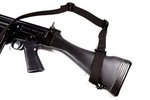
The stock or brace serves as the rear contact point with your body, enabling proper cheek weld for aiming and helping manage recoil. Your choice between a stock or brace depends on your rifle's configuration (rifle vs. pistol), intended use, and legal requirements in your jurisdiction.
Stocks vs. Braces
Stocks: Designed to be shouldered, stocks require your AR to have a barrel length of at least 16" (or be registered as an SBR). They offer the best cheek weld and recoil management.
Pistol Braces: Originally designed to help disabled shooters fire AR pistols one-handed by strapping to the forearm. Current ATF regulations significantly restrict their use—check current laws before purchasing.
Stock Types
Collapsible/Telescoping: Adjustable length of pull (LOP) to fit different shooters and accommodate body armor. The M4-style collapsible stock is the most common. Requires a mil-spec or commercial buffer tube.
Fixed: Non-adjustable stocks like the A2 or Magpul MOE Rifle Stock. Generally more rigid and can be more comfortable for dedicated setups. Requires a rifle-length buffer tube.
Precision/Chassis: Adjustable cheek risers and length of pull for optimal fit. Heavier but provides the best ergonomics for precision shooting. Popular for designated marksman and competition rifles.
Mil-Spec vs. Commercial
Mil-Spec: Slightly smaller diameter tube (1.146") with the stock locked by a friction lock. The industry standard for quality builds.
Commercial: Larger diameter (1.168") with a slanted back. Less common today but still found on some budget builds. Make sure your stock matches your buffer tube spec.
Considerations
Weight vs. Features: Minimalist stocks save weight but may lack storage or cheek adjustment. Feature-rich stocks improve ergonomics but add ounces that compound with other components.
Cheek Weld: If using optics with higher mounts, look for stocks with adjustable cheek risers or higher combs.
QD Sling Points: Many stocks include quick-detach sling attachment points for easy sling configuration changes.