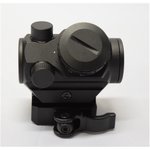
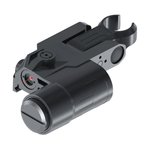
Laser aiming devices project a visible or infrared beam onto your target, providing an aiming reference without using traditional sights. They excel in specific scenarios but have limitations to understand.
Laser Types
Visible (Red/Green): Can be seen with the naked eye. Green is easier to see in daylight than red. Used for CQB and civilian defensive applications.
Infrared (IR): Only visible with night vision devices (NVDs). Standard for military and LE night operations. Useless without NVGs.
Dual (Visible + IR): Both beams in one unit. Maximum flexibility for varied conditions.
Designator Classes
Class 1/Class 3A: Eye-safe visible lasers. Consumer legal, suitable for most uses.
Class 3B: More powerful, can cause eye injury. Restricted (typically IR for military/LE).
IR Illuminator: Not a pointer but a "flashlight" in IR spectrum. Illuminates for NVG use.
Key Features
Adjustability: Windage and elevation for zeroing. Quality units hold zero under recoil.
Activation: Pressure switches, push buttons, or constant-on options. Remote pressure switches are highly recommended.
Power Source: CR123A or AAA common. Battery life varies significantly between visible and IR use.
Popular Configurations
Pistol/Compact: Small units for CQB or pistol use. Examples: Streamlight TLR-8, Crimson Trace.
Full-size Rifle: Larger units with more features. Examples: Steiner DBAL, L3 ATPIAL (PEQ-15).
Combo Units: Combined light and laser in one package. Streamlines controls.
Limitations
Range: Visible lasers have limited effective range, especially in daylight. Beam disperses at distance.
Visibility: Red lasers nearly useless outdoors in daylight. Green better but still limited.
Target Indication: Your laser shows the target where you're aiming—both ways.
Battery Dependency: When the battery dies, so does your aiming solution.
Use Case Considerations
Lasers are most effective for:
- Close quarters where speed beats precision
- Night vision operations (IR)
- Situations where you can't get a proper cheek weld
- As a training aid to diagnose trigger control
They're less effective for:
- Precision shooting at distance
- Daytime outdoor use (visible lasers)
- Primary aiming solution on a rifle
For most civilian AR-15 uses, a quality optic and weapon light serve better than a laser. Lasers excel in specific niches—know if yours fits before investing.