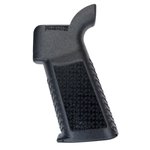
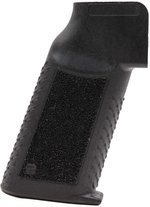
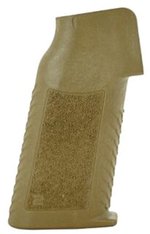
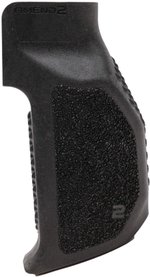
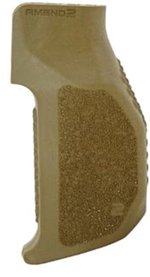
The pistol grip is your primary point of contact with the rifle and significantly influences shooting comfort, control, and accuracy. While often overlooked, the right grip can reduce fatigue during extended shooting sessions and improve your trigger finger placement for better accuracy.
Grip Angles and Ergonomics
Standard A2 Angle (~15°): The classic mil-spec angle found on M16/M4 pattern rifles. Familiar to those with military experience and works well with traditional shooting stances.
Reduced Angle (~25°): More vertical grips like the Magpul K2 position your wrist more naturally, reducing strain. Popular for close-quarters and modern shooting techniques.
Vertical (0°): Straight grips provide maximum wrist comfort for some shooters and work well with certain shooting positions. Less common but preferred by some competitive shooters.
Material and Texture
Polymer: Lightweight, durable, and available in various textures from smooth to aggressive. Most popular choice for general use.
Rubber Overmold: Provides excellent grip even with wet or sweaty hands. Adds slight weight but improves comfort and control.
Aluminum/G10: Premium materials offering unique textures and durability. Heavier but extremely tough and available in striking aesthetics.
Features to Consider
Storage compartments in the grip can hold spare batteries, cleaning supplies, or ear plugs—useful for range bags but add complexity. Beaver tails extend up the back of the grip to fill the gap behind the trigger guard, improving comfort and control. Finger grooves can help consistent hand placement but may not fit all hand sizes. Consider your hand size, shooting style, and whether you'll use gloves when selecting a grip.