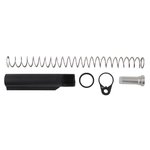
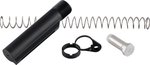
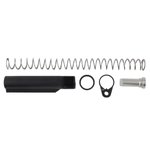
The buffer tube (receiver extension) threads into the lower receiver and houses the buffer and buffer spring. It also provides the mounting surface for your stock or brace. Selecting the correct buffer tube is essential for proper fit with your chosen stock and reliable function.
Tube Types
Mil-Spec Carbine: 1.146" diameter with the locking positions cut at an angle. The standard for quality builds and compatible with most aftermarket stocks. Requires a mil-spec stock.
Commercial Carbine: 1.168" diameter with a slanted back. Less common today and generally found on budget builds. Requires a commercial-spec stock—the two are not interchangeable.
Pistol: Smooth tube without stock mounting positions. Used with pistol braces or as a simple cap for buffer-only setups.
Rifle-Length: Fixed-length tube used with A1/A2 style stocks and rifle buffer systems. Provides a longer, smoother recoil impulse.
Material and Features
7075-T6 Aluminum: The standard material, strong and lightweight.
6061-T6 Aluminum: Slightly softer and less expensive. Adequate for most uses.
Position Adjustment: Carbine tubes typically have 6 positions for length of pull adjustment. Some enhanced tubes offer more positions for finer adjustment.
QD Sockets: Many tubes include built-in quick-detach sling mount sockets, eliminating the need for a separate end plate with QD.
Anti-Rotation Features: Quality tubes have anti-rotation provisions that index with the lower receiver, preventing the tube from loosening during use.
Installation Notes
Proper installation requires correct staking of the castle nut to prevent loosening under recoil. Use a quality armorers wrench and properly torque (35-40 ft-lbs typically). The end plate goes between the castle nut and receiver, and you'll need to ensure proper alignment of any QD sockets with your sling mounting preferences.