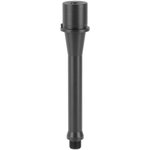
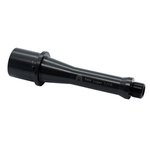
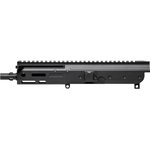
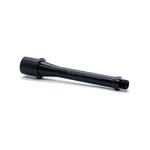
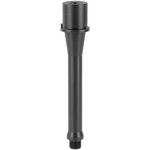
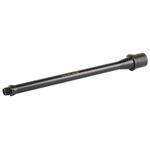
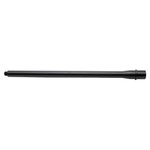
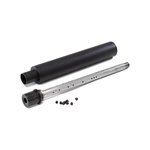
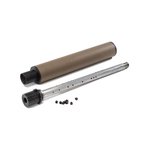
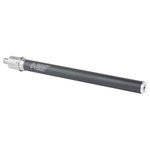
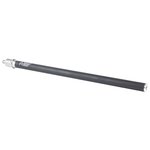
The barrel is the most critical component for accuracy in your AR-15. It determines your rifle's effective range, accuracy potential, and to a large extent, its purpose. Barrels vary widely in length, profile, material, twist rate, and chamber specification—each choice affects performance.
Barrel Length
7.5"-10.5": Ultra-short barrels for close quarters. Significant velocity loss and increased muzzle blast. Requires SBR registration or pistol configuration.
11.5"-12.5": Popular SBR/pistol lengths balancing compactness with reasonable ballistics. 12.5" is a sweet spot for 5.56 with acceptable velocity.
14.5": Classic M4 length. Must be pinned/welded to a muzzle device for 16" OAL, or registered as an SBR.
16": Minimum rifle length without NFA registration. Excellent balance of velocity, maneuverability, and legal simplicity. The most popular choice.
18"-20": Longer barrels for maximum velocity and improved accuracy at distance. Common for designated marksman or varmint rifles.
Barrel Profiles
Government/M4: Thick under the handguard, thin under the gas block, thick again at the muzzle. A compromise designed around the M203 grenade launcher mount. Common but not optimal.
Lightweight/Pencil: Thin throughout for minimum weight. Heats up quickly but excellent for builds prioritizing portability.
SOCOM: Heavy profile throughout for sustained fire and accuracy. Adds significant weight but maintains point of impact as the barrel heats.
Heavy/Bull: Maximum thickness for ultimate heat dissipation and rigidity. Competition and precision rifle choice. Very heavy.
Twist Rate
Twist rate determines which bullet weights stabilize properly:
- 1:9: Stabilizes bullets up to 62gr. Limited versatility.
- 1:8: Excellent all-around choice, handles 55gr to 77gr well.
- 1:7: Mil-spec rate, optimized for 62gr and heavier. Overstabilizes light bullets at short range but fine for most uses.
Material and Finish
4150 CMV (Chrome Moly Vanadium): Mil-spec steel, excellent durability and barrel life.
416R Stainless: Superior accuracy potential, easier to machine precise rifling. Less durable than CMV for high-volume fire.
Chrome Lining: Protects bore from corrosion and wear, extending life significantly. Slight accuracy trade-off. Standard for duty/defensive rifles.
Nitride/Melonite: Alternative to chrome lining, treats the entire barrel surface. Excellent corrosion resistance without accuracy penalty. Increasingly popular.
Chamber Specifications
.223 Wylde: Hybrid chamber shooting both .223 and 5.56 with excellent accuracy. The best choice for most builds.
5.56 NATO: Mil-spec chamber with longer leade. Handles all ammunition but slightly less accurate than .223 Wylde with match ammo.
.223 Remington: Tightest chamber for best accuracy with .223 loads. Do not fire 5.56 NATO ammunition—dangerous pressure levels.